AI Integration Strategies
Strategic approaches to successfully integrating AI into your business operations, workflows, and decision-making processes.

Strategic framework for AI integration across business functions
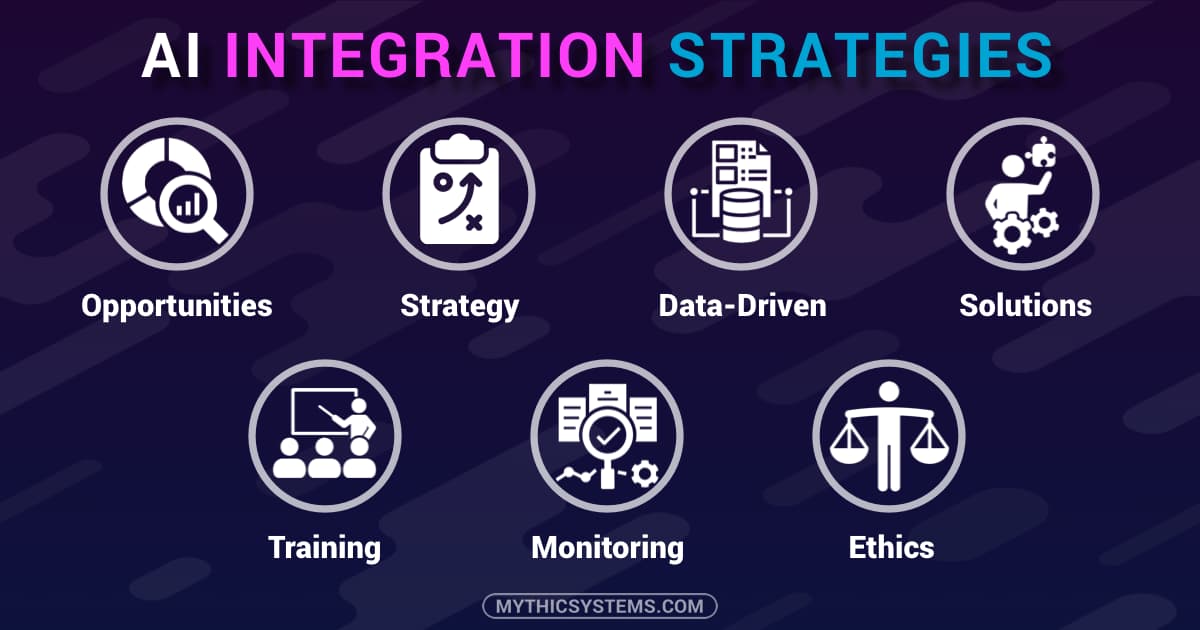
Integration Framework Overview
- • Start with clear business objectives and measurable outcomes
- • Assess current infrastructure and identify integration points
- • Implement pilot programs before full-scale deployment
- • Ensure proper training and change management processes
- • Monitor performance and iterate based on results
The Strategic Integration Process
Successful AI integration requires a systematic approach that aligns technology capabilities with business needs. This process involves careful planning, stakeholder alignment, and phased implementation to minimize risk while maximizing value.
The most effective AI integrations start small, prove value quickly, and scale systematically across the organization. This approach builds confidence, demonstrates ROI, and creates momentum for broader adoption.
Phase 1: Assessment and Planning
Business Readiness Evaluation
Assess your organization's readiness for AI integration by evaluating data quality, technical infrastructure, team capabilities, and cultural factors.
- • Data availability and quality assessment
- • Technical infrastructure evaluation
- • Team skill gap analysis
- • Change management readiness
Use Case Identification
Identify high-impact, low-risk use cases that can demonstrate quick wins and build organizational confidence in AI capabilities.
- • Process automation opportunities
- • Decision support enhancements
- • Customer experience improvements
- • Operational efficiency gains
Phase 2: Pilot Implementation
Launch targeted pilot programs to test AI solutions in controlled environments. This phase focuses on proving concept viability, measuring impact, and refining implementation approaches.
Pilot Success Criteria
Technical Metrics
- • Accuracy and performance benchmarks
- • System integration success
- • Data quality improvements
- • Response time optimization
Business Metrics
- • Cost reduction achievements
- • Productivity improvements
- • User satisfaction scores
- • ROI calculations
Phase 3: Scaling and Optimization
Based on pilot results, scale successful implementations across the organization while continuously optimizing performance and expanding capabilities.
This phase requires robust governance frameworks, comprehensive training programs, and ongoing monitoring to ensure sustained success and value realization.
Common Integration Challenges
Data Quality Issues
Poor data quality can undermine AI performance. Invest in data cleaning, standardization, and governance processes before implementation.
Change Resistance
Address employee concerns through transparent communication, comprehensive training, and clear demonstration of AI benefits.
Integration Complexity
Legacy systems may require significant modification. Plan for integration challenges and consider API-first approaches.
External Resources

Related Guides
Continue your AI strategy journey with these related resources
Building Ethical AI Businesses
Learn how to build AI businesses that prioritize human values and responsible innovation
AI Transforms Businesses
Understanding how AI is fundamentally changing business operations and strategy
AI Survival Strategies
Essential strategies for thriving in the AI-driven business landscape
Join 1000+ leaders transforming with AI
Get strategic insights, tools, and frameworks delivered to your inbox. Our AI Guide newsletter informs, involves, and inspires leaders navigating the AI era.
Ready to Integrate AI Into Your Business?
Let's create a strategic AI integration plan tailored to your specific business needs and objectives.